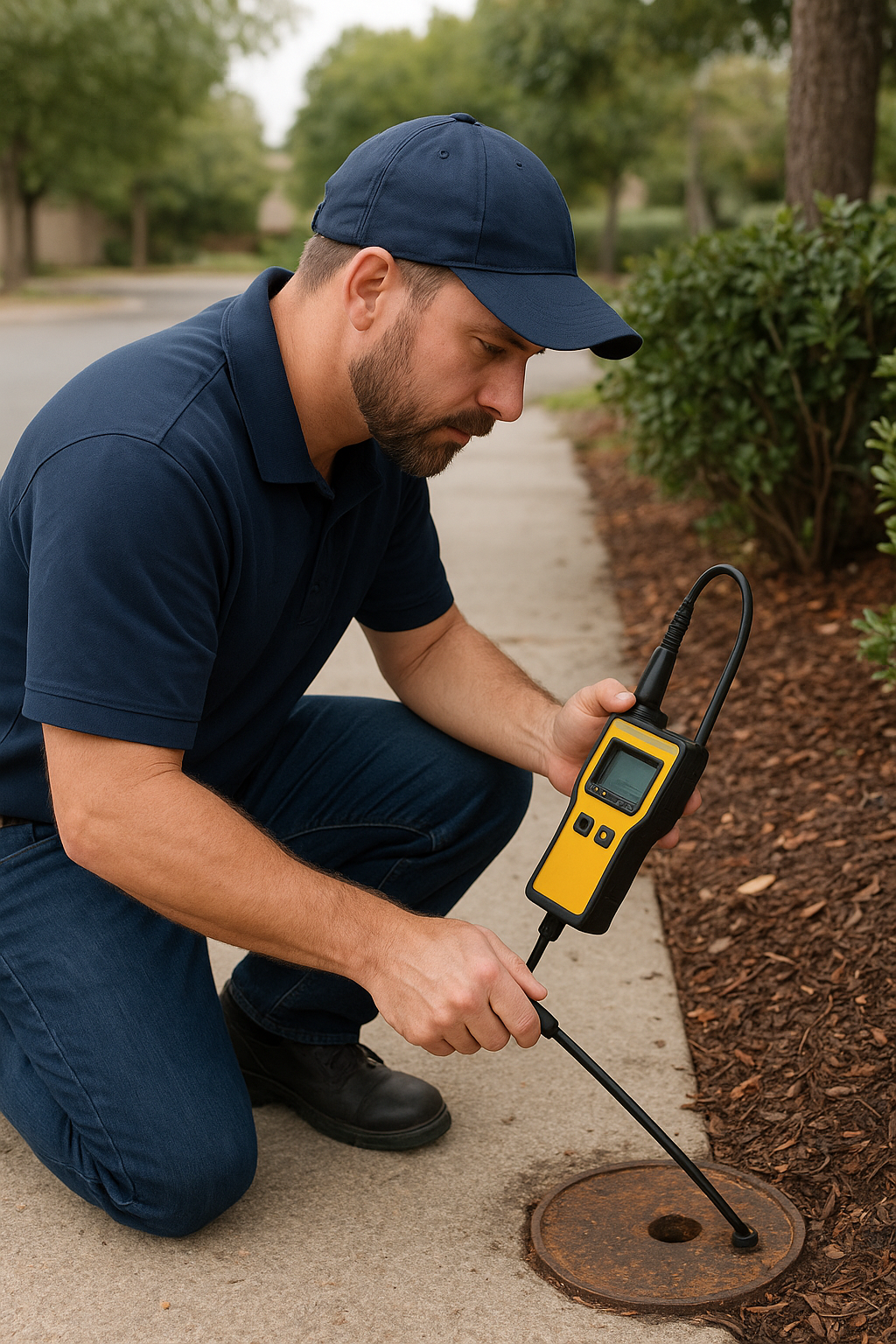
Sacramento’s older neighborhoods like East Sacramento, Land Park, and Oak Park contain many pre-1970 homes where galvanized and early copper supply lines have corroded from decades of hard water exposure. These leaks often stay hidden behind walls or under slabs until a sudden pressure drop or ceiling stain appears. Technicians use acoustic listening devices and camera inspection to locate the exact failure point without tearing up finished surfaces unnecessarily.
Mature trees along streets in Midtown and near the American River Parkway send roots into sewer laterals, creating slow leaks that saturate soil and damage foundations. Hot dry summers followed by cool wet winters cause ground movement that stresses joints, making leak detection more critical after the first fall rains. Access through crawl spaces or concrete driveways in South Sacramento adds time and requires careful restoration planning.
Home size, pipe material, and permit requirements in Sacramento County directly affect how long detection takes and whether excavation or wall repair follows. Newer areas such as North Natomas usually have PEX or copper that is easier to isolate, while older stock demands more thorough camera work to avoid missing multiple small leaks along the same run.
Technician insight
In Sacramento the thing that catches most people out with leak detection is assuming a single wet spot means one easy fix. Older galvanized lines in East Sacramento and Land Park often have multiple pinhole leaks along the same run, and mature tree roots near the American River Parkway can hide a second failure just a few feet away. Checking the entire line the first time saves reopening walls later.
Hidden Leak Behind Kitchen Wall
A homeowner in East Sacramento noticed rising water use and a faint ceiling stain. Inspection found two small pinholes in the original galvanized line running behind the kitchen wall. The line was isolated and replaced with copper through the crawl space, restoring pressure without removing the entire wall.
Leak Detection Services We Offer
✓Slab Leak Detection
Locates leaks under concrete slabs common in East Sacramento and Land Park homes using electronic and camera methods to avoid unnecessary demolition.
✓Sewer Line Leak Detection
Identifies root intrusion and joint failures in older sewer laterals throughout Midtown and Oak Park with video inspection equipment.
✓Water Supply Line Leak Detection
Traces leaks in galvanized and copper supply lines that corrode fastest in pre-1970 Sacramento neighborhoods using pressure and acoustic testing.
✓Hidden Pipe Leak Detection
Finds leaks inside walls and ceilings of older homes in Downtown Sacramento and Curtis Park without removing large sections of drywall.
✓Irrigation Line Leak Detection
Detects underground irrigation leaks that waste water during Sacramento’s hot dry summers using flow monitoring and listening devices.
Leak Detection Cost in Sacramento, CA
| Service | Typical Range | What Affects It |
|---|---|---|
| Basic Leak Detection Visit | $175–$350 | Moves with home size and whether camera work is needed in older East Sacramento or Land Park homes. |
| Slab or Sewer Line Detection | $300–$650 | Higher when roots or multiple corroded sections are suspected in pre-1970 properties. |
| Follow-Up Excavation Planning | $150–$400 | Depends on permit requirements and restoration scope in Sacramento County. |
Ranges are typical for Sacramento, CA and confirmed with an exact written quote before any work starts.
How it works
- 1
Initial Assessment
Review water bill spikes and visible signs at the Sacramento property, then discuss access points in crawl spaces or yards.
- 2
Non-Invasive Testing
Apply pressure tests and acoustic equipment to narrow the leak zone without cutting into finished surfaces.
- 3
Camera Inspection
Run a camera through accessible lines to confirm the exact location and pipe condition in older Sacramento homes.
- 4
Report and Options
Provide findings with repair recommendations that account for pipe material, home age, and local permit needs.
Pricing
Pricing varies by home age, pipe material, and access difficulty in Sacramento neighborhoods.