2026-09-12 · Scott Merrick
Why Sacramento's Clay Soil and Tree Roots Wreck Sewer Lines
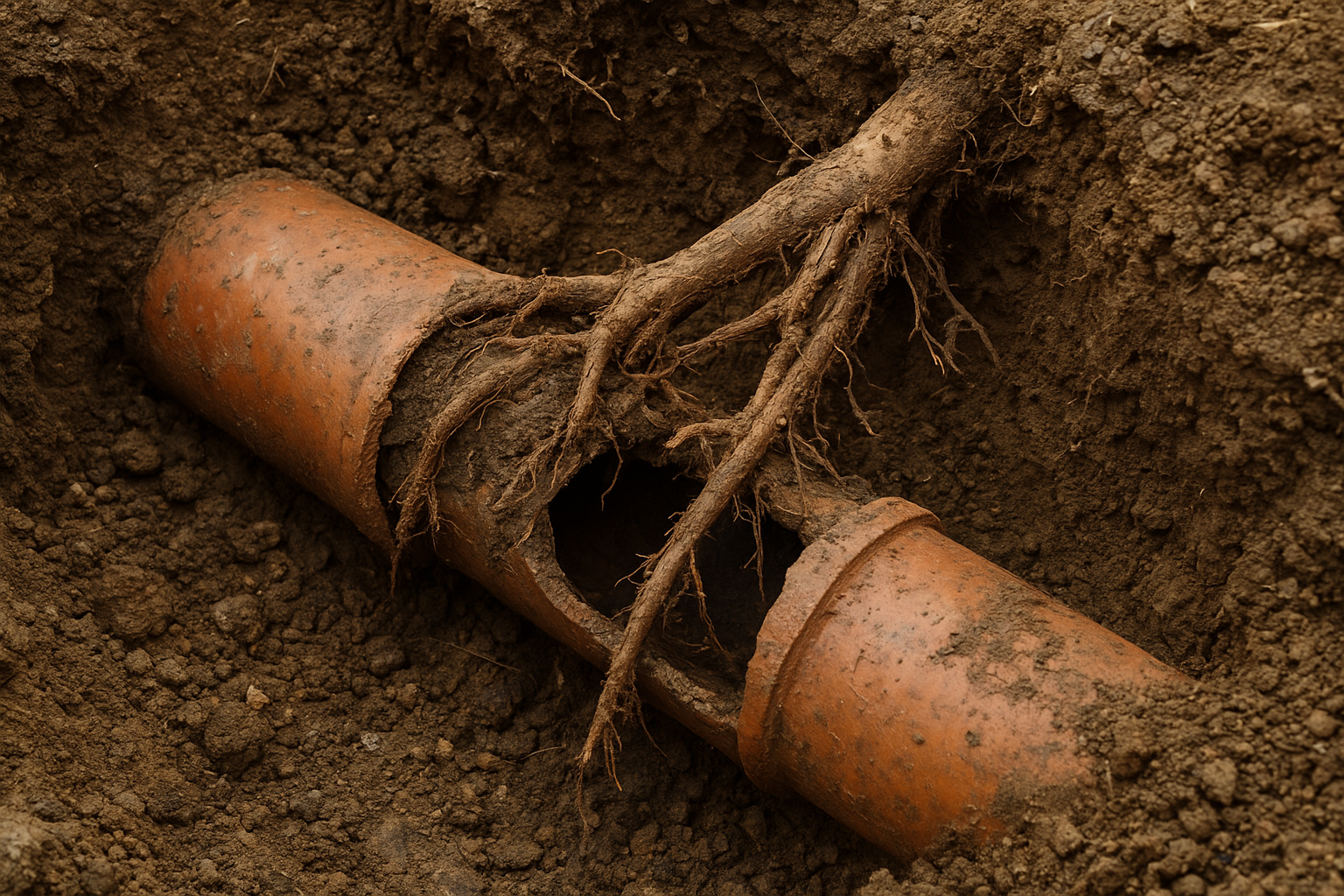
If you own an older home in Sacramento and your drains back up every winter, you are not doing anything wrong — you're fighting the neighborhood's own trees. The tree-lined streets of East Sacramento, Land Park, Curtis Park and Oak Park are exactly the areas where sewer laterals were laid in clay pipe decades ago, and clay pipe plus mature roots plus wet winters is the most reliable recipe for a blocked line there is.
Why roots get into the pipe in the first place
Clay sewer laterals are joined in short sections, and over decades those joints shift slightly and weep a little moisture. To a tree root, that trace of water and nutrients underground is a target. Roots find the joint, work in through the seam, and then fan out inside the pipe into a mass that catches everything flowing past. It doesn't happen overnight — it's a slow intrusion that finally announces itself as a full backup, almost always right after the first heavy rains of fall when the ground saturates and the roots surge.
Why snaking alone keeps failing
A standard cable machine punches a hole through the root mass and restores flow for a while, which is why a snaked line often re-blocks within weeks. The roots are still there; only the center was cleared. For Sacramento's root-heavy clay lines, hydro jetting does a far more complete job because high-pressure water scours the roots off the full pipe wall rather than just boring through the middle. Even then, a camera inspection afterward is the only way to know whether the roots are gone or whether the joint itself has failed.
When cleaning stops being enough
There's a point where the pipe is no longer just clogged — it's cracked, offset or partially collapsed from years of root pressure and shifting clay soil. At that stage repeated cleanings are money down the drain, and the real fix is sewer line repair. The good news for Sacramento homeowners with established landscaping is that trenchless sewer repair can often replace the line without trenching up the whole yard, saving the mature trees and hardscape that made the neighborhood worth living in.
What to do before the next wet season
If your line backed up last winter, the smart move is a camera inspection in late summer, before the rains. It tells you whether you're dealing with roots that jetting will clear or damage that needs repair, and it lets you fix it on your schedule instead of during an emergency backup on a rainy night.