2026-09-12 · Scott Merrick
Hard Water in Sacramento: What It Does to Your Pipes and Water Heater
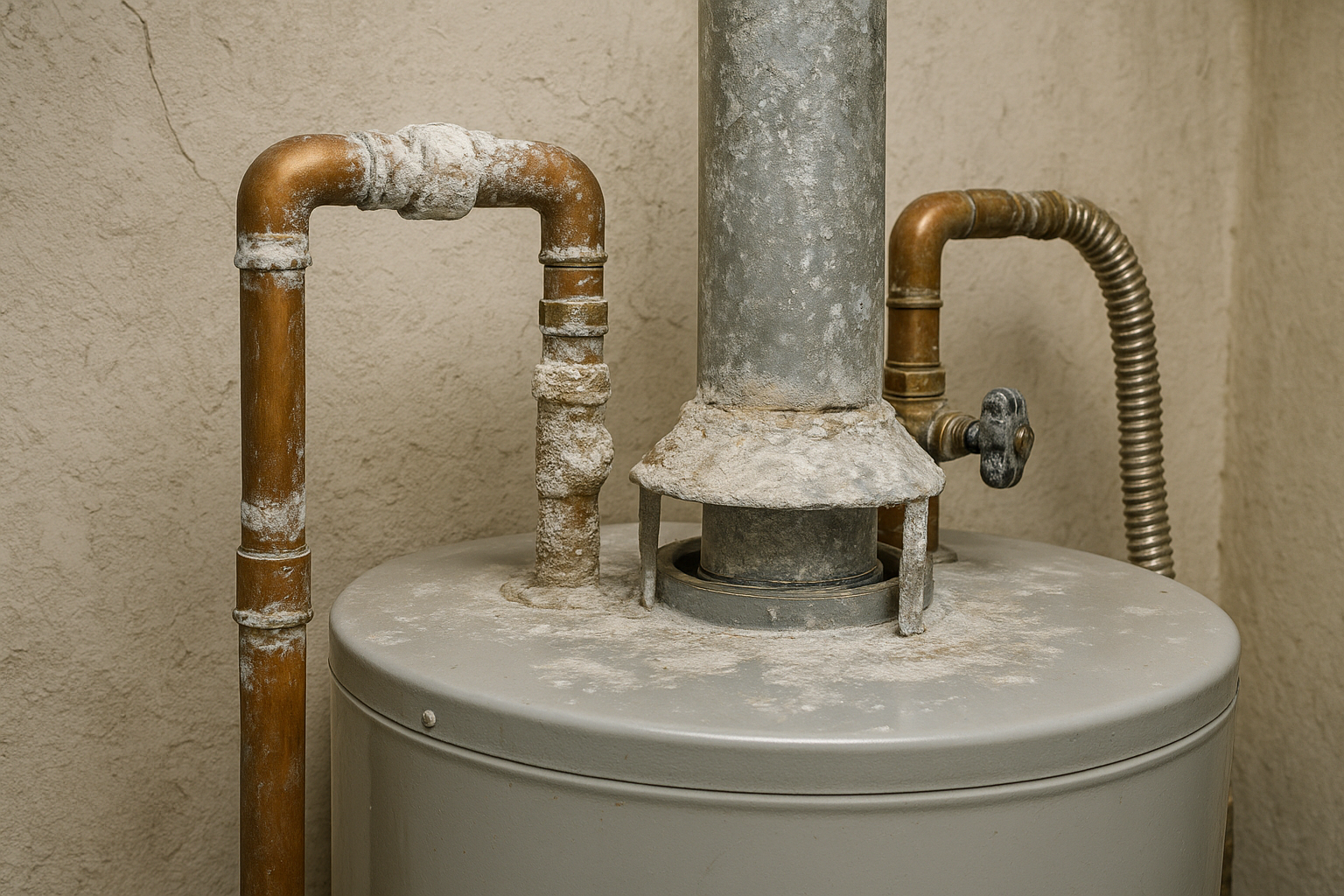
Sacramento sits on some of the harder water in California, and most homeowners never think about it until a water heater fails early or the pressure in an older house slowly fades. Hard water simply means a high concentration of dissolved minerals — mostly calcium and magnesium — and every time that water is heated, those minerals drop out of solution and cling to metal. Inside a water heater tank that shows up as a growing layer of sediment on the bottom; inside pipes it shows up as scale that narrows the usable diameter year after year.
Why Sacramento water is especially tough on water heaters
When sediment builds on the bottom of a tank, it acts as an insulator between the burner or lower element and the water above it. The unit has to run longer and hotter to reach temperature, which wears out the lower element on electric models and cracks flue baffles on gas ones. This is why so many tanks in East Sacramento, Land Park and Oak Park lose capacity or fail years before the 10-to-15-year mark they should reach. The single best defense is an annual flush, and if your unit is already struggling our water heater repair service starts by clearing that sediment before anything else.
Tankless units aren't immune — they're more sensitive
People switch to tankless expecting to escape the problem, but a tankless heat exchanger has narrow passages that scale up even faster than a tank. A tankless unit in Sacramento that skips its annual descaling will start throwing error codes and running cold mid-shower within a couple of winters. That's why every tankless water heater install we do includes a bypass valve kit so the unit can be flushed with vinegar each year without special tools.
What hard water does to the pipes themselves
The same scale builds inside supply lines. In pre-1970 Sacramento homes with original galvanized pipe, the interior corrodes and scales at the same time, so the effective diameter shrinks until the pressure at the shower is a trickle. Once that starts, cleaning won't reverse it — the metal is compromised from the inside. That's the point where a whole-house repipe to PEX or copper is the only real fix, and it's why repipes are so common in the older grid.
The signs worth watching for
Rusty or cloudy hot water, a rumbling or popping water heater, white crust on faucet aerators and fixtures, and pressure that's dropped over the years are the everyday tells that hard water is doing its work. None of them are emergencies on their own, but together on an older home they usually mean the water heater and the supply lines are both aging faster than they should — and it's cheaper to plan for that than to wait for the leak.